
AI-driven email funnels
AI-driven email funnels: How to Orchestrate Email, SMS, WhatsApp, and Push for Measurable Customer Journeys
How to build AI-driven email funnels that combine email, SMS, WhatsApp, and push — focused on segmentation, deliverability, automation, and analytics for measurable journeys.
Listen to this article
Reader's guide
This article is organised around the following topics. Use the headings below to scan the existing guidance before reading the detail.
AI-driven email funnels: How to Orchestrate Email, SMS, WhatsApp, and Push for Measurable Customer Journeys
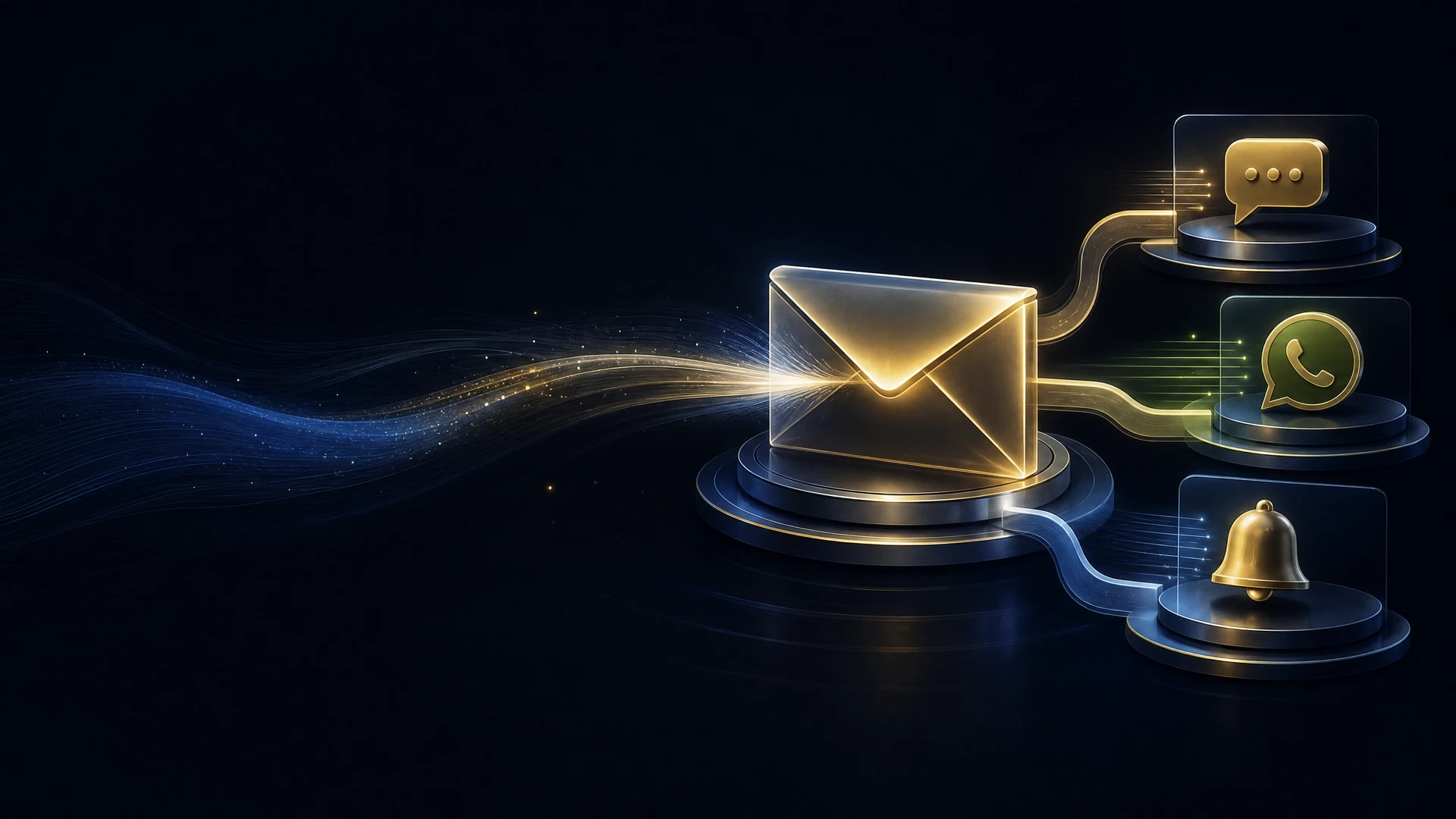
AI-driven email funnels are no longer a single-channel tactic — they are orchestration engines that combine email with SMS, WhatsApp, and push notifications to create frictionless, deliverability-first customer journeys. Below I lay out a practical framework for integrating these channels with precise segmentation, automation, and analytics so your campaigns are relevant, compliant, and measurable.
Why AI-driven email funnels matter now
AI-driven email funnels use machine learning to predict intent, rank the best message variants, and trigger channel-appropriate outreach at the right time. That means fewer spray-and-pray sends, higher relevance, and more predictable customer experiences. But AI is a tool — success depends on four fundamentals: clean segmentation, channel-aware automation, deliverability hygiene, and analytics that close the loop.
Build the foundation: segmentation and data hygiene
H3: Start with customer-centric segments
- Use behavior (browsing, product views, cart events), lifecycle stage (new lead, active, lapsing, VIP), and engagement recency to define segments. AI can suggest microsegments but validate them against business rules.
- Prioritize segments that map to revenue or retention goals (e.g., cart abandoners, repeat buyers, or at-risk subscribers).
H3: Maintain data hygiene for AI to work
- Normalize identifiers (email, phone number, device ID) and ensure consent flags are explicit for each channel (email, SMS, WhatsApp, push).
- Keep suppression lists (unsubscribes, do-not-contact, hard bounces) centralized so your automation respects compliance and deliverability.
Orchestration: choose the right message, channel, and cadence
H3: Channel rules of thumb
- Email: best for long-form content, receipts, and nurture sequences. Use for primary lifecycle flows and A/B testing subject lines and preheaders.
- SMS: high immediacy — use for time-sensitive offers, cart recovery reminders, and concise confirmations. Keep messages short and link to mobile-optimized pages.
- WhatsApp: conversational experiences, two-way support, and rich media offers. Use for high-touch VIP outreach or when customers prefer messaging apps.
- Push notifications: ideal for in-app or in-browser re-engagement with tight frequency control.
H3: AI-powered decisioning
- Use predictive models to pick the next-best channel per user: if a recipient consistently opens SMS but rarely email, let AI escalate to SMS for urgent flows while preserving long-form email for non-urgent content.
- Implement channel cooldowns and cross-channel suppression so customers aren’t overwhelmed.
Deliverability first: practices that protect inbox access
- Warm up new sending domains and IPs methodically before scaling campaigns.
- Keep bounce and complaint rates low by pruning inactive addresses and using re-engagement flows before deletion.
- Authenticate every sending domain with SPF, DKIM, and DMARC and monitor DMARC reports.
- Segment sends by engagement level and throttle high-volume sends to avoid ISP throttling.
Automation architecture: triggers, templates, and testing
- Build modular automation blocks: trigger (event), eligibility (segment + suppression), personalization tokens, channel selection, and measurement points.
- Use dynamic templates that let AI swap subject lines, hero images, or CTAs based on predicted preference.
- Set up test harnesses: run controlled A/B and multi-armed bandit tests on subject lines, send times, and channel mixes.
Analytics: what to measure and how to act
Key measurement pillars (avoid vanity-only metrics):
- Engagement ladder: delivered → opened/viewed → clicked/tapped → converted → retained.
- Channel efficiency: cost per engaged user by channel and attribution windows.
- Journey-level KPIs: time-to-conversion, messages-per-conversion, churn risk before and after flows.
- Deliverability signals: bounce rate, complaint rate, and inbox placement (where available).
Use dashboards that combine these signals so AI models learn from outcomes and campaign teams can iterate quickly. Importantly, instrument conversion and retention events on owned properties (landing pages, checkout, account actions) so analytics reflect business outcomes.
Compliance and consent: channel-specific considerations
- Store consent timestamps and channel preferences. For WhatsApp, maintain template approvals where required. For SMS, preserve opt-in keywords and local regulatory rules.
- Implement unsubscribe flows per channel and treat cross-channel unsubscribes according to your privacy policy.
SEO and landing pages: the overlooked part of funnel performance
- Optimize destination pages for mobile-first performance (critical for SMS and WhatsApp links). Slow pages kill conversions even from highly relevant messages.
- Use clear, optimized headings, canonical tags, and fast-loading assets to support organic discovery of campaign landing pages and reduce bounce.
- Track UTM parameters per channel to attribute traffic correctly in analytics without polluting SEO data.
Quick implementation checklist
- Define 3 revenue-focused segments and map a 3-step funnel to each (email → SMS → push/WhatsApp).
- Verify consent and unify suppression lists across channels.
- Authenticate sending domains and start a warm-up schedule for any new IPs.
- Create dynamic templates with interchangeable modules (subject, hero, CTA).
- Instrument conversion and retention events on landing pages (UTMs, server-side events).
- Launch a test: run a 2-week A/B or bandit test on subject lines + channel mixes.
- Review deliverability, engagement, and conversion metrics weekly and iterate.
Resources and next steps
If you want help mapping these technical building blocks to your business goals, Explore our solutions [blocked] to see channel orchestration options, or Get started [blocked] with a diagnostic that assesses segmentation, consent, and deliverability. For deeper reading on related topics, visit our blog [blocked].
Conclusion
AI-driven email funnels earn their keep when they’re built on clean data, strict deliverability practices, and cross-channel automation that respects customer preference. Start small with a prioritized set of segments and one multi-channel funnel, instrument outcomes, and let models recommend next-best actions. Over time you’ll replace guesswork with repeatable, analytics-driven customer journeys that scale without sacrificing relevance or inbox access.