
omnichannel automation
Omnichannel Automation Guide: AI-Driven Email, SMS, WhatsApp & Push Strategies
A practical guide to building AI-driven omnichannel automation across email, SMS, WhatsApp, and push—covering segmentation, deliverability, automation architecture, and analytics.
Listen to this article
Reader's guide
This article is organised around the following topics. Use the headings below to scan the existing guidance before reading the detail.
Omnichannel Automation Guide: How to Orchestrate Email, SMS, WhatsApp & Push with AI
AI can make omnichannel engagement feel less like a scatterplot of tactics and more like a single, consistent conversation. This guide turns the content pillars — AI-powered email funnels, SMS, WhatsApp, push, customer segmentation, automation, deliverability, customer journeys, analytics, and SEO — into a practical blueprint you can apply this quarter.
Why omnichannel automation matters
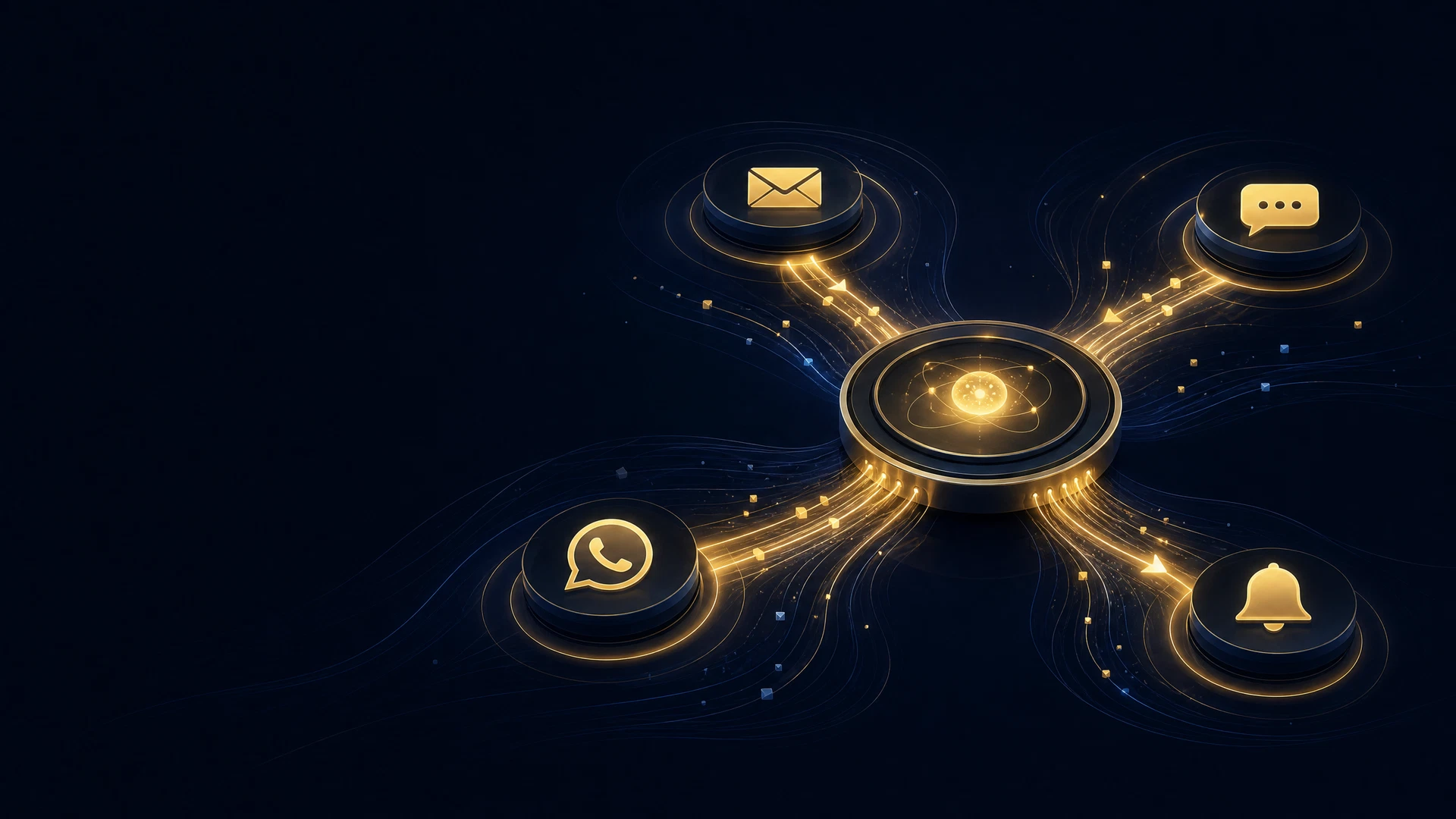
Customers move between inboxes, mobile apps, and messaging apps. Omnichannel automation ensures each touchpoint is contextually relevant, timed well, and measurable. Instead of separate campaigns for email, SMS, WhatsApp, and push, think of a single journey engine that picks the right message and channel for each person.
Build the foundation: data, identity, and consent
H3: Collect the right identity signals
- Centralize customer identifiers (email, phone, device token, WhatsApp ID) into a single customer record. Use deterministic links (login, purchase history) first; supplement with probabilistic signals only where compliant.
H3: Capture consent and preferences
- Record channel-level consent and messaging frequency preferences. This is critical for deliverability and compliance across SMS, WhatsApp, and email.
Segment with precision — not complexity
Good segmentation reduces friction and increases relevance. Use a small number of high-impact segments mapped to clear business outcomes.
- Behavior segments: recent buyers, cart abandoners, repeat browsers
- Value segments: high-lifetime-value, price-sensitive, trial users
- Engagement segments: inactive 30/90/180 days, push-disabled
Combine algorithmic predictions (propensity to buy, churn risk) with rule-based segments for campaigns that scale.
Design AI-powered funnels that decide, not just send
H3: Channel decisioning
Use AI models to decide which channel to use first and when to escalate. Example decision flow:
- Attempt primary channel (user preference).
- If not delivered/opened within pre-set window, try secondary channel (SMS or push).
- Reserve WhatsApp for conversational re-engagement or high-intent support.
AI should be used to rank likely best-performing channels per recipient based on past behaviors, time-of-day engagement, and device signals.
H3: Message personalization
Feed customer profile + real-time context into template rendering: product viewed, last purchase, predicted next-best-offer. Keep templates modular: header, offer block, social proof block, CTA.
Deliverability and how to protect it
- Email: warm-up new sending IPs, maintain list hygiene, authenticate (SPF, DKIM, DMARC), and segment sends to protect sender reputation. Monitor complaints and unsubscribe patterns.
- SMS/WhatsApp: validate numbers, manage frequency caps, and use sanctioned templates for WhatsApp where required.
- Push: minimize noisy messages; prioritize transactional and high-value notifications to keep device tokens active.
Deliverability is cross-channel: a spammy SMS can increase complaints and indirectly impact email reputation if not managed at the contact level.
Automation architecture: orchestration, not duplication
- Use a central orchestration layer to define journeys and routing rules; integrate channel providers via modular connectors. Avoid building isolated automations in each channel tool.
- Create standardized event schemas for triggers (purchase, abandon, milestone) so analytics and AI models feed the same signals.
Measure, iterate, and attribute correctly
H3: Key metrics to track
- Engagement: opens, clicks, replies, push interactions, session starts
- Conversion funnel: view → add-to-cart → checkout start → purchase
- Deliverability signals: delivery rates, bounces, complaints, unsubscribes
Design experiments with hold-out groups to measure incremental lift from channel combinations (email+SMS vs email-only) rather than raw conversions.
H3: Use analytics to improve decisioning
Feed performance back into the AI layer: if a segment consistently prefers push in evenings, the channel-decider model should learn that. Maintain a rolling validation set so your model doesn’t overfit to recent short-term promotions.
SEO and landing page alignment
Your messages should lead to web assets that convert. Optimize landing pages for relevance and speed: align subject lines and preview text with landing page H1 and meta tags so the visitor finds exactly what the message promised. That improves both conversion and organic discoverability over time.
Practical checklist to deploy in 30 days
- Centralize identity and consent records.
- Define 6–8 priority segments mapped to business outcomes.
- Build 3 modular templates per channel (transactional, promotional, lifecycle).
- Implement channel decisioning rules in your orchestration layer and pilot AI ranking on a subset of traffic.
- Run a 4-week deliverability hygiene sprint; authenticate and warm as needed.
- Set up attribution tests with hold-out groups and a monthly model retraining cadence.
Where to get help
If you want an implementation partner that focuses on the intersection of AI and multichannel orchestration, review our core offerings on solutions [blocked] and when you’re ready to run your first pilot, start here: Get Started [blocked]. For tactical write-ups and examples, see more resources on our blog [blocked].
Conclusion
Omnichannel automation isn’t about spraying messages across channels — it’s about a single, intelligent engine that knows who to talk to, when, and where. Focus first on clean identity and consent, practical segmentation, channel decisioning, and measurable experiments. With those pieces in place, AI becomes a multiplier that helps you serve more relevant messages with better deliverability and measurable business impact.